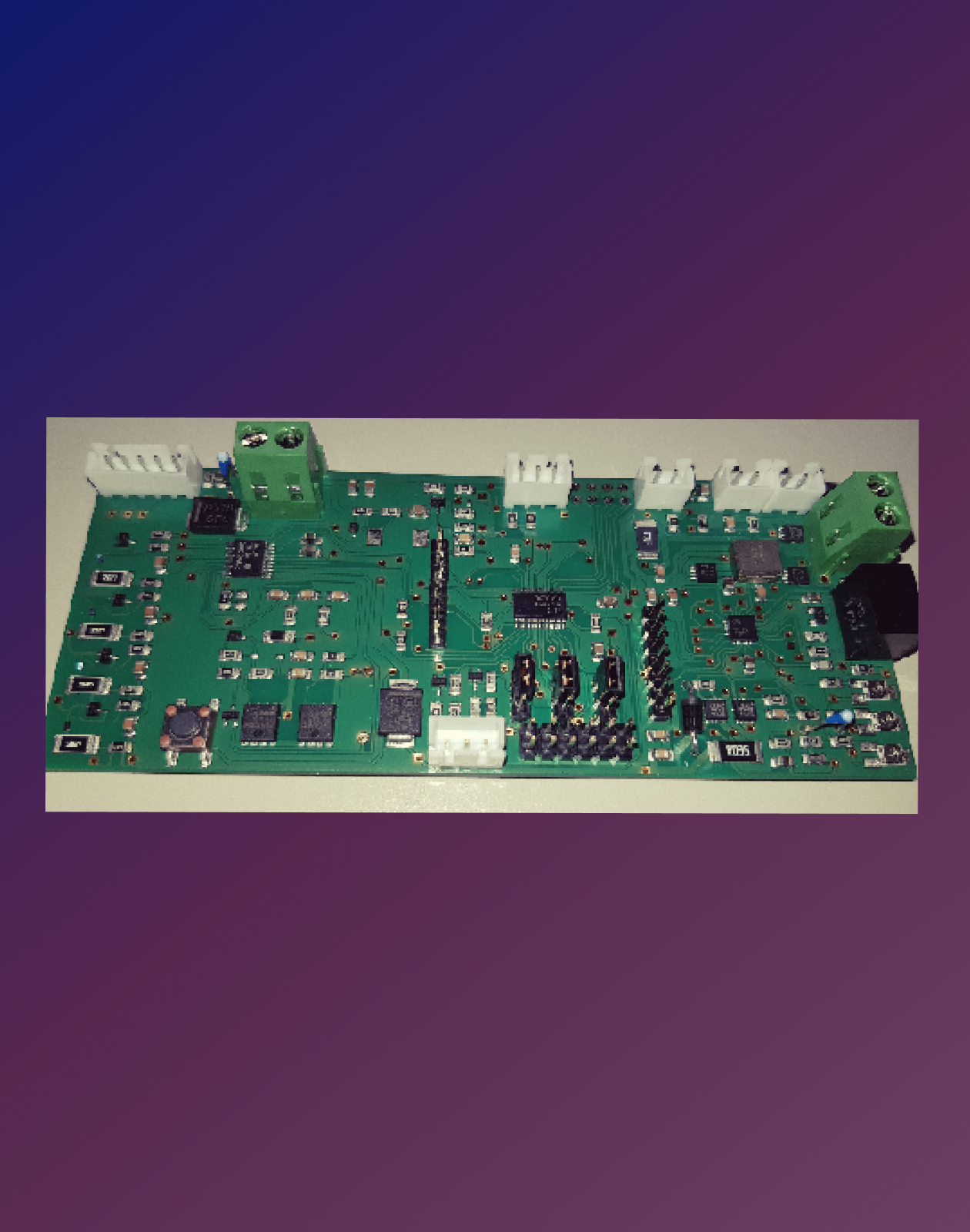
Battery Managment System
Introduction
A complete battery management system was developed for a lithium-polymer accumulator used in automotive applications. The system was designed to ensure safe, reliable, and efficient operation of the battery under demanding conditions.
Which problem I have solved?
Lithium-polymer batteries must be carefully supervised to avoid unsafe situations such as excessive charging, high temperatures, or uneven battery cells. The developed system addresses these issues by continuously observing the condition of each cell and keeping them evenly balanced during operation. Special attention was given to the overall design to ensure that all parts work together reliably. As a result, the battery can be used safely and dependably in a miniature vehicle environment.
Technical Tools Used
The system was developed using a combination of hardware and software tools. Electrical schematics were created with the program Eagle, which was used to design to draw the schematics and PCB layout. Appropriate electronic components were carefully selected and dimensioned to meet the project requirements. For system functionality and testing, software tools were used to implement monitoring, control, and communication features.
What I have learned?
During this project, I gained hands-on experience in both hardware and software aspects of embedded systems. I learned how to design and implement a battery management system for lithium-polymer batteries, including creating electrical schematics and PCB layouts using Eagle. I improved my skills in selecting and dimensioning electronic components, implementing monitoring, control, and communication features, and ensuring system reliability and safety. Additionally, I gained experience with protocols such as I2C and SPI, and learned how to integrate software and hardware to achieve a fully functional and dependable system.
Keywords
EmbeddedSystems BatteryManagementSystem HardwareDesign SoftwareDevelopment PCBDesign Eagle I2C SPI